
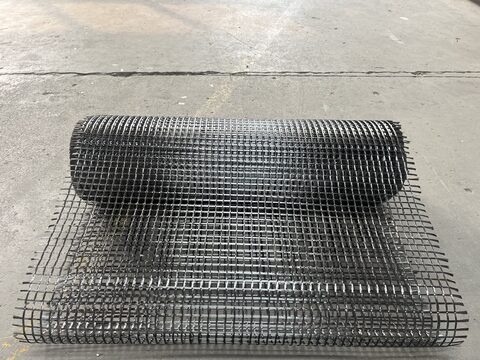
When evaluating structural strengthening systems, engineers commonly consider two advanced composite solutions: fiber-reinforced cementitious matrix (FRCM) mesh and carbon fiber reinforced polymer (CFRP) fabric. While both systems enhance the load-bearing capacity of concrete, masonry, and steel structures, they differ fundamentally in material composition, installation methods, and performance characteristics. Understanding these differences is essential for selecting the most appropriate system for a given application. This article compares FRCM mesh and CFRP fabric across key parameters, referencing general guidelines from ACI 440.2R and other industry standards.
Material Composition and Matrix System
The most fundamental difference lies in the matrix. FRCM systems use a cementitious (inorganic) matrix, typically a proprietary blend of Portland cement, fine aggregates, and polymers. The reinforcing mesh is made from high-strength fibers such as alkali-resistant glass, basalt, or carbon, woven into an open-grid fabric. In contrast, CFRP fabric consists of continuous carbon fibers impregnated with an organic epoxy resin matrix (polymer-based). The epoxy resin cures to form a rigid, high-strength composite laminate. This distinction in matrix type influences many downstream properties, including fire resistance, vapor permeability, and compatibility with substrate materials.
Application and Installation Process
Installation procedures differ markedly. CFRP fabric is applied using a wet lay-up process: the substrate is first primed and coated with epoxy resin, then the dry or pre-saturated carbon fabric is applied and saturated with additional epoxy. The resin must cure without disturbance, often requiring controlled temperatures and humidity. FRCM systems, on the other hand, involve applying a base coat of cementitious mortar to the prepared substrate, embedding the mesh into the mortar, and then applying a top coat. The cementitious matrix cures by hydration, similar to concrete. FRCM installation is generally more tolerant of damp or uneven surfaces and does not require specialized resin mixing or handling, though proper curing is still critical.
Mechanical Performance and Design Considerations
CFRP fabric offers high tensile strength (typically 3,800–4,800 MPa for the fiber) and a high modulus of elasticity (>230 GPa). It is ideal for applications requiring significant strength gain with minimal added thickness. FRCM mesh systems have lower tensile strength (often 1,000–2,500 MPa for the fiber) and a lower modulus, but they also exhibit more ductile behavior due to the distributed cracking in the cementitious matrix. Design according to ACI 440.2R or similar documents typically treats CFRP as a linear-elastic material, whereas FRCM often follows a bilinear stress-strain relationship. FRCM also provides better performance in high-temperature environments because the inorganic matrix does not soften like epoxy. Additionally, FRCM systems have higher vapor permeability, making them suitable for moisture-sensitive substrates such as historical masonry.
Substrate Compatibility and Durability
CFRP fabric is effective on sound concrete, steel, and timber, but it is less compatible with damp surfaces or substrates with poor bond strength. The epoxy resin can be sensitive to moisture during cure. FRCM mesh is highly compatible with concrete and masonry, including brick and stone. The cementitious matrix bonds well to mineral substrates and allows water vapor to escape, reducing the risk of entrapment and freeze-thaw damage. FRCM systems also offer superior performance in fire conditions because the inorganic matrix is non-combustible, while epoxy-based CFRP loses strength significantly above glass transition temperatures (typically 60–80°C). For applications requiring fire resistance, FRCM may be the preferred choice unless CFRP is protected with fire-resistant coatings or insulation.
Cost and Logistics
Material costs vary: CFRP fabric is generally more expensive per square meter than FRCM mesh, but it delivers higher strength. Total installed cost depends on substrate preparation, labor, and protective coatings. FRCM systems often require thicker sections (typically 10–20 mm) compared to CFRP (1–3 mm), which may affect architectural clearances. CFRP fabric can be more labor-intensive due to resin mixing and careful application to avoid wrinkles. FRCM installation is similar to traditional plastering and may be more familiar to construction crews. Both systems require proper quality control and qualified installers to ensure performance.
Selecting the Right System
The choice between FRCM mesh and CFRP fabric depends on project requirements. CFRP fabric is well-suited for high-strength retrofits where minimal added thickness is critical, such as beam flexural strengthening or column wrapping in seismic upgrades. FRCM mesh is ideal for applications with moisture concerns, fire-resistance requirements, or substrates where bond with epoxy is uncertain, such as historic masonry or clay brick. Engineers should evaluate load demands, environmental exposure, substrate conditions, and cost constraints. Consulting with a manufacturer or structural engineer experienced in composite strengthening is recommended to determine the most appropriate system.
Both FRCM and CFRP represent proven technologies for structural strengthening. Understanding their distinct characteristics ensures that the selected system delivers reliable performance for decades of service.