
Many structures built before modern seismic codes share the same weaknesses: columns with too little transverse steel, short lap splices, weak beam-column joints, and walls that cannot handle in-plane shear. In an earthquake these details fail in a brittle way. Carbon fiber retrofit targets exactly these problems, adding strength and — just as important — ductility, the ability to deform without collapsing.
Column confinement
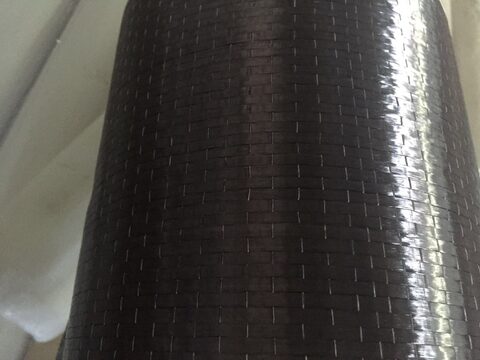
The most common seismic use of CFRP is wrapping columns. A fabric jacket applied with fibers running around the column puts the concrete into a state of confinement. Confined concrete can sustain much higher strains before crushing, which raises both axial capacity and, more critically, the column’s ability to absorb energy through repeated load cycles. A thin carbon wrap can deliver confinement comparable to a heavy steel jacket while adding almost no dimension and no corrosion risk.
Lap-splice and shear fixes
Older columns often have reinforcement lap splices that are too short and located in the plastic-hinge zone. A circumferential wrap clamps the splice and keeps the bars from slipping. The same wrapping provides shear strengthening, preventing the diagonal shear failures that are among the most dangerous in a quake because they happen suddenly and with little warning.
Walls, beams, and joints
Beyond columns, CFRP fabric strengthens unreinforced masonry and concrete shear walls against in-plane and out-of-plane forces, reinforces coupling beams, and is used in detailed schemes around beam-column joints. Because the material is thin and bonded, it can often be hidden behind finishes and applied while a building stays partly in use — a major advantage over jacketing or added shear walls.
Design considerations
Seismic retrofit is performance-based and demanding. The strengthening must be compatible with how the whole structure responds: adding strength in the wrong place can shift failure to a more brittle mechanism, so the goal is usually a balanced increase in strength and ductility. Anchorage of the FRP is critical — wraps and sheets must be detailed so they do not peel at their ends under cyclic load. Connections, diaphragms, and foundations have to be checked as part of the system. This work belongs to a qualified structural engineer following the governing seismic code and FRP guidance such as ACI 440.2R.
Done properly, carbon fiber confinement is one of the most effective and least disruptive ways to bring an older concrete structure up to modern seismic expectations.