
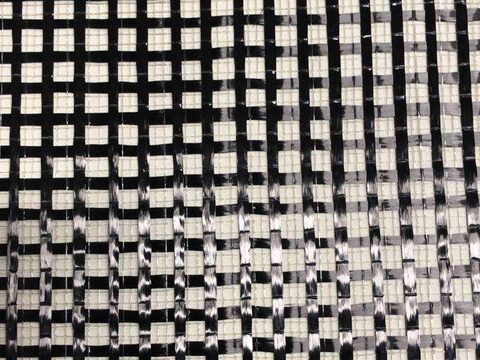
Marine environments present some of the most aggressive challenges to concrete and steel structures. Constant exposure to saltwater, tidal cycles, wave action, and airborne chlorides accelerates corrosion of reinforcement and causes rapid deterioration of structural elements such as piers, piles, and seawalls. Traditional repair methods—such as concrete patching, cathodic protection, or steel jacketing—often provide only temporary remedies or introduce new corrosion pathways. Carbon-fiber-reinforced polymer (CFRP) wrap systems have emerged as a highly effective, durable solution for both restoring and protecting marine structures against corrosion and mechanical degradation.
The Mechanisms of Corrosion in Marine Structures
Corrosion in reinforced concrete is primarily driven by chloride ingress. Chloride ions penetrate the concrete cover, depassivate the steel reinforcement, and initiate galvanic corrosion cells. The resulting expansive rust products cause internal tensile stresses, leading to cracking, spalling, and delamination of the concrete. In steel piles and sheet piles, direct exposure to saltwater leads to uniform or pitting corrosion, reducing load-bearing cross-sections. Marine structures also suffer from freeze-thaw damage, abrasion from floating debris and ice, and biological fouling—all of which exacerbate deterioration. Without intervention, corrosion can compromise structural integrity, leading to costly repairs or premature replacement.
Principles of CFRP Wrap Repair and Protection
CFRP wrap systems consist of high-strength carbon fibers impregnated with an epoxy resin and applied externally to the structural element. The wrap serves two primary functions. First, it provides a physical barrier against moisture, chlorides, and other aggressive agents, significantly reducing the rate of further corrosion. Second, the CFRP constrains expansion of corroding steel and provides supplemental confinement and tensile reinforcement, restoring or even increasing the load capacity of the damaged member. The high tensile strength (typically exceeding 3,000 MPa), high modulus of elasticity, and excellent fatigue resistance of carbon fibers make CFRP wraps particularly suited for marine applications where repeated loading and harsh conditions prevail.
Application Process for Marine CFRP Wraps
The successful performance of a CFRP wrap system depends on proper surface preparation, material selection, and installation procedures. The following steps are essential:
- Surface preparation: Concrete substrates must be cleaned of loose material, oil, and marine growth. Defective concrete is removed, and cracks are injected with epoxy. Steel surfaces are abrasive-blasted to achieve a near-white metal finish (SSPC-SP10) and primed to prevent flash rusting.
- Corrosion mitigation: Active corrosion zones should be addressed—corroded steel reinforcement is cleaned and coated with a protective primer or anodes are installed per ACI 440.2R guidelines. For steel piles, the CFRP wrap often encases the entire corrosion-affected zone.
- Fabric impregnation and wrapping: Carbon fiber fabric is saturated with a low-viscosity epoxy and applied to the prepared surface, typically in multiple layers oriented to match principal stress directions. The wrap is consolidated to remove entrapped air and ensure intimate contact with the substrate.
- Curing and protection: The system is allowed to cure under controlled temperature and humidity. For underwater applications, specially formulated epoxy systems are used, and placement methods such as wet-layup with underwater cure are employed. A final UV-resistant coating is often applied above the waterline.
Quality control during installation includes pull-off tests, bond tests, and verification of layer thickness and fiber orientation, following guidelines from recognized standards such as ACI 440.2R and fib Bulletin 14.
Performance and Longevity in Marine Environments
CFRP wraps exhibit exceptional durability when properly designed and installed. The inert nature of carbon fibers and epoxy resin provides inherent resistance to saltwater, chemical attack, and UV radiation (with adequate coating). Laboratory studies and field monitoring over decades demonstrate that CFRP systems maintain structural performance with minimal degradation in marine splash and tidal zones. The wraps also offer improved freeze-thaw resistance and can accommodate thermal movements of piles and decks. Compared to steel jacketing, CFRP eliminates future corrosion of the jacket itself and reduces long-term maintenance. Many design guidelines (e.g., ACI 440.2R) recommend service life extensions of 20 to 50 years for properly designed CFRP strengthening systems in marine environments.
Design Considerations for Marine CFRP Applications
Structural engineers designing CFRP wrap systems for marine structures must account for several factors unique to the environment:
- Exposure zone: Components in the splash zone experience the most severe chloride exposure and require the thickest wraps and best detailing at terminations. Submerged zones require underwater-applied epoxies with slower curing.
- Loading conditions: Piles and piers are subject to lateral forces from waves, berthing impact, and currents. The CFRP wrap must be designed to resist combined flexural, shear, and axial demands. Confinement of corroded columns is particularly effective in restoring ductility.
- Thermal and moisture effects: Differential thermal expansion between CFRP and concrete is minimal, but moisture absorption in the resin can soften the matrix over time. Epoxy systems with low moisture absorption (<2%) are recommended. A vapor-permeable coating may be applied to prevent osmotic blistering.
- Anchorage and termination: Proper anchorage of the CFRP ends is critical to prevent peeling. A minimum 150 mm overlap or mechanical anchoring is typically used. Detailing at the pile-to-deck connection must avoid water trapping and accommodate movement.
Design follows limit-state principles with partial safety factors for materials and loads. For corrosion protection alone, a design approach based on barrier effectiveness and chloride diffusion resistance can be used, but structural strengthening cases require following models in ACI 440.2R or ACI 440.3R.
Long-Term Maintenance and Monitoring
While CFRP wraps require minimal maintenance compared to traditional systems, periodic inspections are recommended. Visual checks for blistering, delamination, or impact damage should be performed annually. Bond integrity can be assessed using sounding or more advanced techniques like infrared thermography or pull-off testing. If damage is detected, localized repair is straightforward: the damaged wrap is cut out, the substrate reconditioned, and a new patch applied with adequate overlap. Over time, the UV coating may require renewal. In many cases, a well-designed CFRP system provides a durable, long-term solution that extends the service life of marine structures by decades, reducing lifecycle costs and enhancing safety.
CFRP wrap systems offer a versatile and proven means of protecting marine structures from the relentless effects of corrosion. By combining barrier protection, structural strengthening, and excellent durability, they address both immediate repair needs and long-term resilience. For engineers and asset owners seeking reliable solutions for piers, piles, and seawalls in aggressive coastal environments, CFRP wraps represent a technology that effectively bridges performance and economy.