
Heritage masonry structures—churches, civic buildings, bridges, and fortifications—represent a tangible link to our past. However, these aging assets often suffer from material degradation, inadequate seismic resistance, and changes in loading over time. Engineers face the challenge of strengthening them without altering their aesthetic or historical significance. Carbon fiber reinforced polymer (CFRP) systems offer a compelling solution because they are lightweight, high-strength, and can be applied in a minimally invasive manner that preserves the original fabric and appearance. This article explores how CFRP can be designed and installed to reinforce historic masonry walls while maintaining their character-defining features.
Understanding the Vulnerabilities of Historic Masonry
Masonry is a composite of units (brick, stone, or block) and mortar. Over decades or centuries, these materials may deteriorate due to moisture, freeze-thaw cycles, chemical attack, or biological growth. Mortar joints lose cohesion, units may spall or crack, and the overall wall system can become less ductile. Additionally, many historic masonry structures were built without consideration of modern seismic design criteria. Typical failure modes include out-of-plane bending, in-plane shear cracking, and loss of wall-to-diaphragm connections. The goal of any intervention is to increase strength and ductility without adding significant mass or rigidity that might attract higher seismic forces, and without compromising the historic integrity of the assembly.
Principles of CFRP Application for Masonry Strengthening
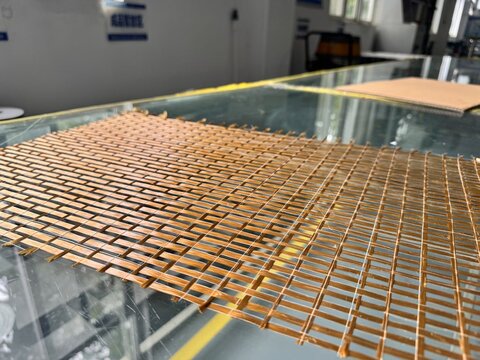
CFRP systems are composed of high-strength carbon fibers embedded in an epoxy resin matrix that is applied as a bonded overlay or as near-surface-mounted (NSM) strips. For masonry, the most common approach is externally bonded (EB) CFRP fabric or plates strategically placed on the wall surface. The CFRP carries tensile stresses that the masonry alone cannot resist, effectively increasing the wall’s capacity in bending and shear. Because the fibers are thin and can be embedded in a skim coat of polymer-modified mortar or painted over, the visual impact is minimal. When the CFRP is applied to the interior face, the exterior historic facade remains untouched. Where exterior application is unavoidable, the fabric can be made nearly invisible by careful selection of paint color or by embedding it in a recessed groove that is later filled and finished to match the surrounding masonry.
For out-of-plane strengthening, vertical strips are often placed at regular intervals along the wall, connected to the floor and roof diaphragms. For in-plane shear, diagonal or vertical strips are applied on the wall face. NSM strips, which are rectangular CFRP bars set into grooves cut into the mortar joints or the masonry units themselves, offer a more discreet option suitable for highly visible areas. The design is guided by accepted principles from ACI 440.2R and reports from the International Federation for Structural Concrete (fib), which provide proven methodologies for calculating the required reinforcement area and bond lengths.
Essential Considerations for Historic Structures
Before specifying CFRP, a thorough survey and material characterization must be performed. The existing masonry’s compressive strength, bond strength, and surface soundness directly affect the viability of bonding CFRP. Weak or friable mortar may require pre-treatment such as repointing with a compatible sacrificial mortar. Moisture content should be assessed: because CFRP is impermeable, trapped moisture could cause damage to the historic material; therefore, proper ventilation or moisture management details are critical.
Reversibility, a cornerstone of conservation philosophy, must be addressed. While CFRP is not easily removed without damaging the substrate, its application can be considered reversible in the sense that it does not prevent future interventions (e.g., it can be mechanically removed if necessary). The use of a sacrificial bond layer or careful documentation of the installed system can facilitate future changes. Equally important is compatibility: the CFRP must not introduce stresses that lead to debonding or localized failure of the historic material.
Installation and Surface Preparation
Proper installation is the key to long-term performance. The surface must be cleaned of dirt, efflorescence, loose material, and any coatings. Any cracks or voids are repaired with an epoxy-compatible filler or grout. For EB CFRP, the fabric is saturated with epoxy and applied to a primed surface, then rolled to ensure full contact and removal of air bubbles. Overlapping is required at joints, and anchor details (such as L-shaped or U-wrapped strips) are used at wall boundaries to develop full strength. Curing time depends on temperature but typically requires a minimum of 7 days at moderate temperatures.
In historic settings, the work area must be isolated to protect adjacent finishes. Dust control, careful handling of materials, and rigorous cleaning of any overspray or drips are essential. Temporary shoring may be needed to support the wall during preparation and installation if its condition is precarious.
Testing and Quality Assurance
After installation, non-destructive testing methods such as tap testing, ultrasonic scanning, or thermography can be used to detect potential voids or debonding. Pull-off tests on witness panels or directly on the installed system (with subsequent repair) can verify bond strength. These procedures help ensure that the CFRP is acting compositely with the masonry as designed.
Conclusion
CFRP strengthening offers a powerful tool for preserving historic masonry structures. When designed and installed with careful attention to the materials’ properties, compatibility, and conservation ethics, it can significantly extend the life of heritage assets while maintaining their original appearance. For practicing engineers and building owners, partnering with an experienced CFRP supplier and structural engineer is essential to develop a solution that meets both performance and preservation goals.