
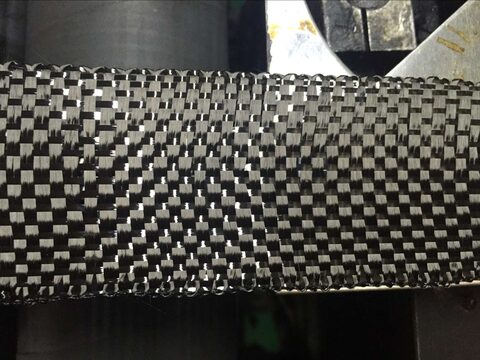
Concrete bridge girders are the backbone of many transportation networks, but they often face degradation over time due to factors such as increased traffic loads, environmental exposure, and material aging. Carbon fiber reinforced polymers (CFRP) have emerged as a highly effective solution for strengthening these structural elements. This guide offers a practical overview of how CFRP laminates and wraps can restore or enhance the load capacity of concrete bridge girders, focusing on key considerations such as design, material selection, surface preparation, and installation.
Understanding the Need for Strengthening
Bridge girders may require strengthening for various reasons. Common scenarios include higher live load demands from increased traffic volume, structural damage from vehicle impact or corrosion, and design changes such as widening the deck. CFRP systems are well-suited to address these challenges because they are lightweight, corrosion-resistant, and can be applied without significant disruption to traffic. The strengthening approach typically involves bonding CFRP laminates or wraps to the tension face of the girder to increase flexural capacity, or wrapping around the cross-section to enhance shear strength and confinement. Design guidelines such as ACI 440.2R provide comprehensive procedures for evaluating existing capacity and determining the required amount of CFRP reinforcement.
Selecting the Right CFRP System
Two primary forms of CFRP are used for girder strengthening: prefabricated laminates (plates) and wet-layup sheets (wraps). Laminates are typically used for flexural strengthening, as they provide high axial stiffness and can be bonded to the soffit of the girder. Wraps, on the other hand, are more flexible and can conform to curved surfaces, making them ideal for shear strengthening and confinement. The choice between them depends on the strengthening objectives, geometry of the girder, and application constraints. Both systems require a compatible epoxy adhesive—typically a two-part structural epoxy—to ensure intimate contact and load transfer between the CFRP and concrete. It is essential to select materials with proven performance data and to follow manufacturer recommendations for storage, handling, and mixing.
Surface Preparation: Critical for Bond Quality
The success of any externally bonded CFRP system is highly dependent on the quality of the concrete substrate. The surface must be clean, sound, and dry. All loose material, laitance, dirt, oil, and existing coatings must be removed by methods such as abrasive blasting, grinding, or high-pressure water jetting. The concrete surface should be roughened to an open-pore texture with a minimum surface profile equivalent to CSP 3 (as defined by ICRI Guideline No. 03732). Any cracks wider than 0.3 mm (0.012 in.) should be epoxy-injected prior to CFRP application. Surface preparation is a step that cannot be compromised; inadequate preparation is a leading cause of premature debonding. After cleaning, the surface must be kept free of dust and moisture until the primer and saturant are applied.
Design Considerations per ACI 440.2R
Design of CFRP strengthening for bridge girders follows a limit-state approach, with checks at both service and ultimate conditions. Key parameters include the existing reinforcement ratio, concrete compressive strength, girder geometry, and target load level. ACI 440.2R provides equations to compute the nominal flexural strength of a strengthened section, accounting for strain limitations in the CFRP to prevent debonding or rupture. The design strain in the CFRP is limited by a reduction factor to account for environmental exposure and long-term effects. For shear strengthening, the contribution of CFRP wraps is calculated based on the effective strain in the fibers, which is typically limited to 0.004 to ensure shear slip does not govern. Anchorage systems, such as U-wraps or near-surface mounted bars, may be required to fully develop the strength of the laminate and prevent end debonding. The designer must also verify that the strengthened girder satisfies serviceability criteria, including crack control and deflection limits under service loads.
Installation Process and Quality Control
CFRP installation should be performed by trained and certified applicators. The process for wet-layup wraps involves applying a primer to the prepared concrete, then saturating the dry carbon fiber fabric with epoxy and pressing it onto the surface using rollers to eliminate air voids. Laminates are bonded using a thickened epoxy paste, and pressure is applied to ensure uniform thickness. The environmental conditions—temperature and humidity—must be within the limits specified by the epoxy manufacturer. Curing time is critical; traffic loads should not be applied until the epoxy has reached sufficient strength, typically after 24–72 hours depending on ambient temperature. Quality control includes daily inspection of bond quality, pull-off adhesion testing (with a minimum bond strength of 1.4 MPa, per ACI 440.2R), and documentation of all installation parameters. Any delamination or blistering must be repaired promptly.
Long-Term Performance and Durability
CFRP-strengthened bridge girders have demonstrated excellent long-term performance when properly designed and installed. The carbon fibers are inherently resistant to corrosion, and the epoxy matrix protects them from moisture and chemical attack. However, exposure to ultraviolet (UV) radiation can degrade the epoxy over time. Therefore, exposed CFRP should be protected with a UV-resistant coating or paint, or by embedding the system in a concrete overlay. Regular inspections should be conducted to check for signs of impact, fire damage, or delamination.
Strengthening concrete bridge girders with CFRP offers a reliable, cost-effective solution to extend service life and increase load capacity. By following established design codes and rigorous installation practices, engineers and contractors can achieve durable results that meet modern performance demands.