
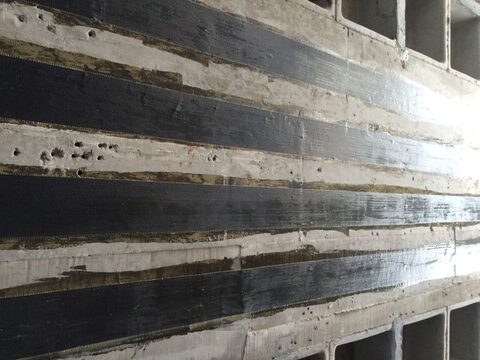
Carbon fiber reinforced polymer (CFRP) composites have long been a go-to solution for structural strengthening, offering high strength-to-weight ratios, corrosion resistance, and ease of installation. As the demand for smarter infrastructure grows, the industry is witnessing a shift toward advanced CFRP systems that not only reinforce but also monitor and maintain themselves. Self-sensing and healable CFRP composites represent the next frontier in structural health monitoring (SHM), promising reduced lifecycle costs and enhanced safety for retrofitted structures. This article explores the emerging trends and technical considerations behind these innovative materials.
What Are Self-Sensing Carbon Fiber Composites?
Self-sensing CFRP composites incorporate functional fillers or intrinsic properties that enable them to detect changes in their own mechanical or electrical state. Traditionally, external sensors such as strain gauges or fiber optics are bonded to CFRP laminates, but these add complexity and potential points of failure. By integrating sensing capabilities directly into the composite matrix, engineers can monitor strain, damage, and temperature in real time without separate sensing layers.
Common approaches include:
- Carbon nanotube (CNT) or graphene nanofillers: Dispersed in the epoxy matrix, these create a conductive network whose electrical resistance changes with strain or crack formation.
- Piezoresistive behavior of carbon fibers: Carbon fibers themselves exhibit a change in resistivity under deformation, which can be measured between embedded electrodes.
- Fiber-optic sensors embedded in CFRP: While not fully intrinsic, this method allows distributed strain measurement using techniques like Brillouin or Raman scattering.
The key advantage is that self-sensing composites eliminate the need for separate sensor installation, reducing labor and potential debonding issues. However, challenges remain in balancing sensitivity with structural performance and ensuring long-term electrical stability.
Self-Healing Mechanisms in CFRP: An Overview
Self-healing CFRP systems address the inevitability of microcracks in the resin matrix, which can propagate under cyclic loading and lead to premature failure. Inspired by biological systems, these materials autonomously repair damage through encapsulated healing agents, reversible polymers, or shape-memory fibers.
The main categories include:
- Microcapsule-based healing: Healing agents (e.g., dicyclopentadiene) are encapsulated in microcapsules dispersed in the matrix. When a crack ruptures the capsules, the agent is released and polymerizes upon contact with a catalyst.
- Hollow fiber or vascular networks: Similar to blood vessels, channels within the CFRP carry healing agents that flow into damaged areas.
- Reversible covalent bonds: Polymers with Diels-Alder adducts or disulfide bonds can re-form when exposed to heat, allowing multiple healing cycles.
Self-healing is particularly valuable in inaccessible retrofit locations where manual repair is costly or impossible. The healing efficiency—often measured by recovery of mechanical strength—varies from 50% to over 90% depending on the system and damage type.
Integration of Sensing and Healing for Holistic SHM
The true potential emerges when self-sensing and self-healing are combined within a single CFRP system. A composite that can detect damage and then initiate repair offers a closed-loop approach to structural health management. For example, a sudden change in electrical resistance could trigger a localized heating cycle via embedded wires or CNT networks, activating reversible polymer healing.
Emerging research focuses on:
- Multifunctional matrices: Epoxy formulations containing both conductive nanofillers (for sensing) and microcapsules (for healing).
- Integrated control systems: Microcontrollers that process resistance data and activate resistive heating or UV light sources to cure healing agents.
- Wireless data transmission: RFID tags or low-power Bluetooth modules embedded in the CFRP to relay structural health data without hardwiring.
Standards such as ACI 440.2R provide general guidance on externally bonded FRP systems, but do not yet cover active SHM components. Engineers must carefully evaluate the long-term durability of embedded electronics and healing agents under environmental exposure (e.g., UV, moisture, thermal cycling).
Design and Installation Considerations for Smart CFRP Retrofits
Retrofitting existing structures with smart CFRP requires special attention to integration with existing monitoring infrastructure and structural behavior. Key considerations include:
- Placement of sensing regions: Self-sensing composites are most effective in high-stress zones (e.g., near cracks in RC beams or at column ends).
- Electrode design: Reliable electrical contact between the CFRP, measuring equipment, and the structure is critical for accurate piezoresistive readings.
- Healing agent compatibility: The healing chemistry must not degrade the mechanical properties of the CFRP or the underlying substrate. Viscosity, curing time, and glass transition temperature must be matched.
- Power and communication: For active heating or wireless transmission, the composite may require a low-voltage power supply, which should be designed to avoid compromising structural integrity.
From a code perspective, retrofits using smart CFRP should follow established procedures for quality control, bond testing, and environmental protection as per ACI 440.2R or fib Bulletin 14. Additional verification of sensor functionality and healing response may be required.
Challenges and Future Outlook
Despite promising laboratory results, self-sensing and healable CFRP face several hurdles before widespread field adoption. The added cost of nanofillers, encapsulation, and electronics can increase material costs by 30–50% compared to standard CFRP. Manufacturing scalability is another concern—uniform dispersion of nanofillers and consistent microcapsule distribution remain challenging.
Durability under service conditions is still under investigation. Questions remain about the long-term stability of electrical conductivity in humid environments and the ability of healing agents to survive multiple freeze-thaw cycles. Moreover, regulatory frameworks for approval of these novel materials as part of load-bearing retrofits are still evolving.
On the positive side, advancements in nanotechnology and additive manufacturing are lowering costs and improving reproducibility. The integration of machine learning algorithms to interpret sensor data and predict failure is a natural next step. As infrastructure aging accelerates globally, the value proposition of self-monitoring, self-repairing CFRP becomes increasingly attractive for critical assets like bridges, tunnels, and historic buildings.
In summary, the convergence of self-sensing and self-healing capabilities in CFRP composites marks a paradigm shift in structural retrofitting. While significant technical and economic hurdles remain, continued research and collaborative standardization efforts will likely bring these smart materials from the lab to real-world applications within the next decade. Engineers and specifiers should monitor these emerging trends as they consider the next generation of strengthening solutions.