
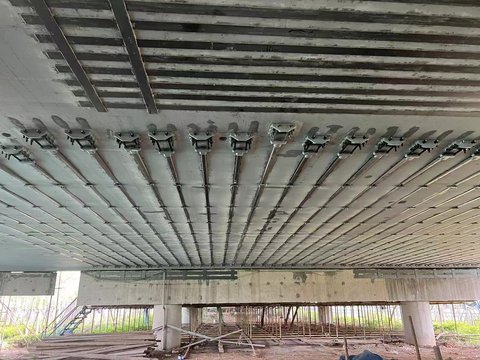
As the construction industry faces increasing pressure to reduce its environmental impact, structural engineers are re-evaluating traditional strengthening methods. The choice between carbon fiber reinforced polymer (CFRP) and steel plate bonding for concrete beam strengthening has significant implications not only for structural performance but also for the carbon footprint of a project. This article presents a lifecycle-based comparison of CO2 emissions associated with these two systems, drawing on principles from lifecycle assessment (LCA) as framed by ISO 14040 and using performance-based design criteria per ACI 440.2R and other relevant standards.
Methodology and Functional Unit
To compare carbon emissions fairly, a functional unit must be defined. For this analysis, the functional unit is the strengthening of a simply supported concrete beam (span 6 m, width 300 mm, depth 500 mm) to increase its flexural capacity by 100%. Two solutions are designed:
- CFRP system: One layer of a typical 0.167 mm thick unidirectional carbon fiber fabric bonded with epoxy (including primer, putty, and saturant) plus a protective coating.
- Steel plate system: A 6 mm thick steel plate (grade S275) bonded with a two-part epoxy adhesive plus a protective coating.
Both designs meet structural requirements for ultimate and serviceability limit states per ACI 440.2R (for CFRP) and established steel design guidelines. The analysis considers material extraction, manufacturing, transportation (200 km to site), installation (including equipment and labor energy), and end-of-life (assumed 50-year service life with no maintenance). Waste factors (5% for CFRP, 10% for steel) are included.
Production Phase: Raw Materials and Manufacturing
The production of CFRP involves energy-intensive processes: polyacrylonitrile (PAN) precursor spinning, stabilization, carbonization, surface treatment, and weaving. The carbon footprint for CFRP fabric is typically in the range of 30–50 kg CO2e per kg, depending on the source of electricity and precursor. For epoxy resins (primer, putty, saturant), a typical value is 4–6 kg CO2e per kg.
Steel production is also energy-intensive but benefits from well-established recycling. The global average emission factor for steel (including recycled content) is about 1.9 kg CO2e per kg for plate products. However, for primary steel (100% virgin), this can be 2.4–2.8 kg CO2e per kg. In this analysis, a mix of 50% recycled content is assumed, leading to 2.4 kg CO2e per kg.
For the functional unit, the CFRP system requires approximately 5.5 kg of fabric and 7.5 kg of epoxy, while the steel system requires 70 kg of steel and 3 kg of adhesive. Production-phase emissions are approximately 245 kg CO2e for CFRP and 180 kg CO2e for steel. Despite the higher emission intensity of CFRP, the lower mass leads to a lower total emission per beam at this stage.
Transportation and Installation
Transportation emissions are calculated based on weight and distance. CFRP materials weigh about 13 kg per beam (fabric + epoxy), while steel weighs 73 kg (plate + adhesive). Using a truck with a load factor of 50% and emission factor of 0.15 kg CO2e per t-km, transport adds 0.4 kg CO2e for CFRP and 2.2 kg for steel—a negligible difference.
Installation of CFRP involves surface preparation, application of primer, putty, and saturant, and curing. Energy use for tools (grinders, mixers) and labor is similar for both systems. Steel plate installation requires heavy lifting equipment (crane or lifting jacks) for plate positioning, epoxy application, and clamping. The steel system demands significantly more on-site energy for lifting (e.g., a 2-ton capacity electric hoist for 2 hours adds approximately 12 kWh, equivalent to 6 kg CO2e assuming a grid intensity of 0.5 kg CO2e/kWh). CFRP installation requires no heavy lifting, so additional energy is essentially zero. Thus, installation emissions favor CFRP.
End-of-Life and Durability
CFRP is a composite material that is difficult to recycle in practice. Most CFRP waste ends in landfill. However, the low mass of CFRP (approx. 5 kg fabric per beam) results in minimal landfill emissions (estimated 10 kg CO2e from decomposition and transport of waste). Energy for cutting and removal is low.
Steel is 100% recyclable. At end-of-life, the steel plate can be removed and sent to a recycling facility. The recycling process saves significant emissions compared to primary production. Assuming the steel is separated and transported for recycling (100 km), net credits are about 1.3 kg CO2e per kg of steel (avoided primary production minus recycling energy). For 70 kg of steel, this gives a credit of 91 kg CO2e. Thus, steel has a substantial end-of-life advantage.
Lifecycle Carbon Footprint Comparison
Summing all phases:
- CFRP system: Production 245 + Transport 0.4 + Installation 0 + End-of-life 10 = 255.4 kg CO2e
- Steel plate system: Production 180 + Transport 2.2 + Installation 6 + End-of-life credit -91 = 97.2 kg CO2e
On a cradle-to-grave basis including recycling credits, steel plate bonding has a lower carbon footprint for the functional unit considered. However, if steel is not recycled (e.g., landfilled), emissions rise to 188.2 kg CO2e, still lower than CFRP. The higher CFRP emissions are driven by the energy-intensive carbon fiber production and absence of recycling.
It is important to note that if the beam requires only a moderate strength increase (e.g., 50%) or if the CFRP system includes high-recycled-content carbon fiber (emerging technology), the balance could shift. Also, CFRP offers advantages in weight (no added dead load), corrosion resistance, and ease of installation where access is limited—factors that may be decisive regardless of carbon footprint.
Concluding Remarks
This lifecycle analysis shows that for a typical beam flexural strengthening, steel plate bonding has a lower carbon footprint than CFRP when realistic recycling rates are applied. However, designers must consider that CFRP often requires significantly less material (by weight) for equivalent strengthening, which can offset its higher production emissions if the functional unit is optimized (e.g., using higher-strength carbon fiber). For a truly sustainable design, engineers should perform project-specific LCAs that account for local recycling infrastructure, energy mix, and structural conditions. Neither system is inherently “green”—the choice depends on the full context.